Just Because You Can, Does It Mean You Should?
I’ve been thinking about something for a while.
It’s a subject that comes up again and again in the textile and quilting world, particularly when we learn from other artists and tutors.
We go to workshops.
We learn a technique.
We make the workshop project.
And then we go home and make another one.
And another.
We change the colours. We change the fabric. We change the flower, the bird, the landscape or whatever the original project was about.
And then we say:
“But it’s my own work. I didn’t copy theirs.”
Well… maybe.
And this is where I want to introduce a term that I have coined:
Emotional Copyright™
Before anyone gets excited — or gets a lawyer involved! — Emotional Copyright™ is not a legal term.
It isn’t a form of copyright and it doesn’t give anyone additional legal rights.
It is my terminology for an artistic and ethical idea that I think we should be talking about much more.
Because there is a difference between legally copying someone’s work and making something that is still so visually connected to another artist’s original project that the viewer thinks of them rather than you.
And I think that difference matters.
First, let’s talk about actual copyright
Australian copyright law protects original expression in certain forms, including artistic works. It doesn’t generally protect an idea or technique simply because someone developed it or teaches it. Copyright is about the particular expression of an idea, rather than the idea itself. (Attorney-General’s Department)
So, if I teach you a particular stitching technique, I don’t suddenly own that stitch.
If I show you how to manipulate fabric in a particular way, I don’t own the physical technique.
If you learn how I use paint on fabric, I can’t simply declare that nobody else is allowed to paint fabric.
That’s not what I’m talking about.
In fact, I absolutely want people to go to workshops and learn.
That’s how we grow.
So what’s the problem?
The problem starts when the technique and the project become so intertwined that the student continues to reproduce the tutor’s visual solution rather than developing their own.
Let’s say a tutor has spent months developing a project.
They’ve worked out the composition.
They’ve experimented with materials.
They’ve figured out what works and what doesn’t.
They’ve developed a particular way of combining technique, shape, imagery and presentation.
You go to their workshop and learn it.
You make the project.
Fantastic.
That’s what the workshop is for.
But then you go home and make the same project again using a different photograph.
Then another using a different subject.
Then another using different colours.
Technically, you may have changed the imagery.
But if I put those pieces beside the tutor’s original work, would I still immediately know where the idea came from?
Would another artist recognise the tutor’s work before they recognised yours?
That’s where I start talking about Emotional Copyright™.
It’s about who gets the creative credit
This is the bit that I think is often missed.
Imagine you make a beautiful piece.
Your name is on the label.
You have spent hours making it.
You have stitched every stitch.
You have chosen the colours.
You have made all the decisions.
But someone who knows the tutor’s work walks past and says:
“Oh, that’s a Gloria Loughman!”
Except it isn’t.
It’s yours.
And that’s the problem.
You made it.
But the visual idea is still referring back to Gloria.
That doesn’t necessarily mean you’ve infringed copyright.
It means you haven’t travelled far enough away from the original visual language for the work to become recognisably yours.
Gloria Loughman is a good example
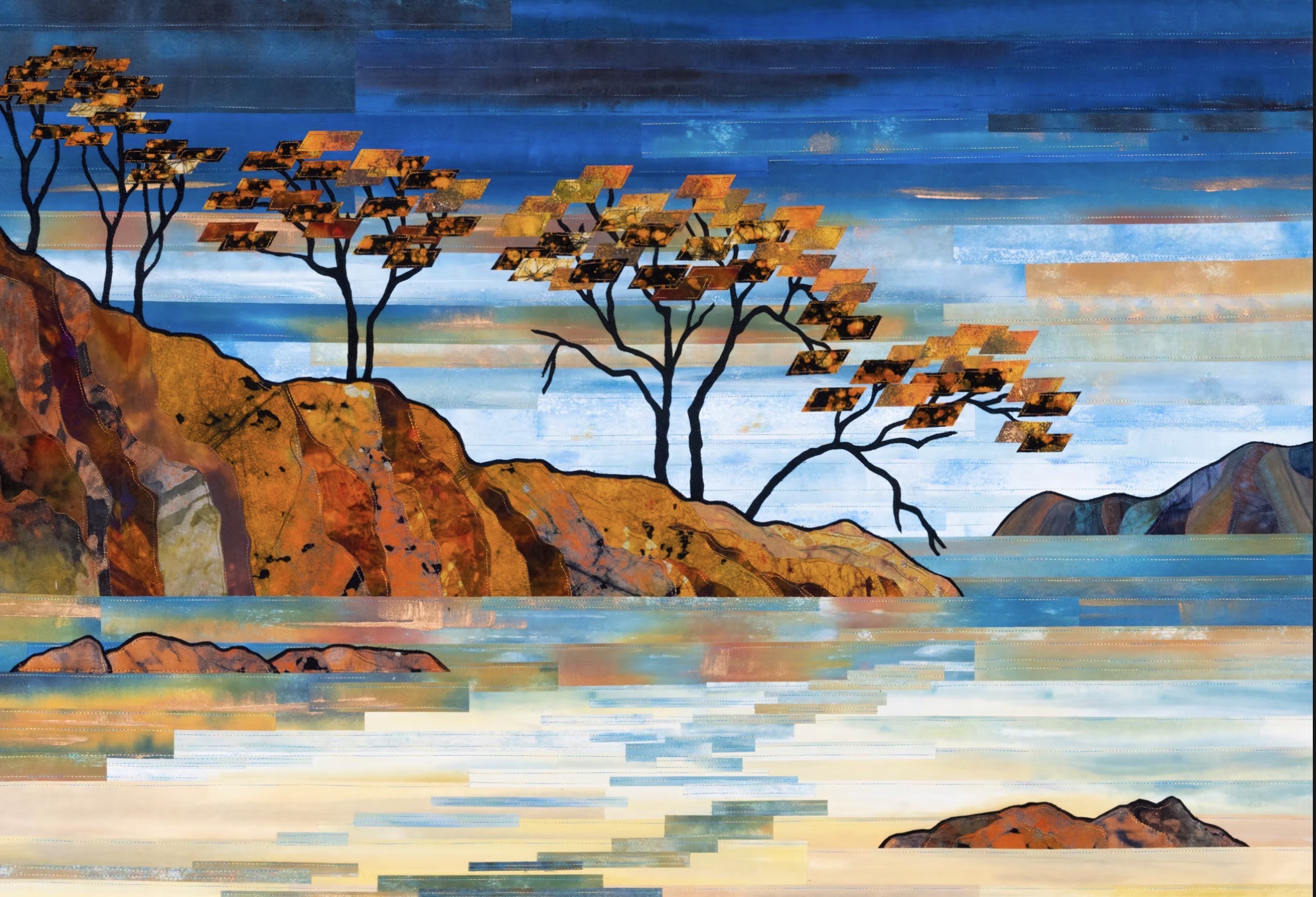
Gloria teaches techniques that she has developed and used in her landscape quilts. Her own workshop descriptions make an important distinction: students learn her techniques and are encouraged to incorporate them into their own designs. (glorialoughman)
That’s exactly the point.
Learn the technique.
But then do something with it.
Don’t spend the rest of your artistic life making Gloria Loughman landscapes with a different tree.
Take what you’ve learned and push it somewhere else.
Change the way you use it.
Combine it with something else.
Change the scale.
Change the subject.
Change the composition.
Make decisions that come from you, rather than simply changing the photograph sitting underneath the tutor’s original idea.
And this is where Emotional Copyright™ comes in
I’m not saying:
“You can’t use that technique.”
I’m saying:
“Use the technique — but push it far enough that the finished work no longer looks like the tutor’s project.”
Because surely that’s what we actually want.
We don’t want to spend years producing work that makes people say:
“Oh, that’s like so-and-so’s work.”
We want them to say:
“That’s theirs.”
That’s the point of developing a visual language.
And that’s the point of Emotional Copyright™.
It is about recognising that an artist’s creative work involves far more than the physical technique they use.
There is the thinking.
The experimentation.
The problem solving.
The particular combination of ideas.
The way they have put those things together.
And while the law may not give them ownership over a technique or an idea, I think we can still choose to respect the creative origin of that work.
So here’s my challenge
Go to the workshop.
Learn the technique.
Make the project.
Enjoy it.
Then put the project away.
And ask yourself:
“What can I do with this that is mine?”
That’s where the really interesting stuff starts.
Because I don’t want you to become a very good copy of your tutor.
I want you to become a very good version of you.
And that, to me, is the heart of Emotional Copyright™.
Emotional Copyright™
Just Because You Can, Does It Mean You Should?
I’ve been thinking about something for a while.
It’s a subject that comes up again and again in the textile and quilting world, particularly when we learn from other artists and tutors.
We go to workshops.
We learn a technique.
We make the workshop project.
And then we go home and make another one.
And another.
We change the colours. We change the fabric. We change the flower, the bird, the landscape or whatever the original project was about.
And then we say:
“But it’s my own work. I didn’t copy theirs.”
Well… maybe.
And this is where I want to introduce a term that I have coined:
Emotional Copyright
Before anyone gets excited — or gets a lawyer involved! — Emotional Copyright™ is not a legal term.
It isn’t a form of copyright and it doesn’t give anyone additional legal rights.
It is my terminology for an artistic and ethical idea that I think we should be talking about much more.
Because there is a difference between legally copying someone’s work and making something that is still so visually connected to another artist’s original project that the viewer thinks of them rather than you.
And I think that difference matters.
First, let’s talk about actual copyright
Australian copyright law protects original expression in certain forms, including artistic works. It doesn’t generally protect an idea or technique simply because someone developed it or teaches it. Copyright is about the particular expression of an idea, rather than the idea itself. (Attorney-General’s Department)
So, if I teach you a particular stitching technique, I don’t suddenly own that stitch.
If I show you how to manipulate fabric in a particular way, I don’t own the physical technique.
If you learn how I use paint on fabric, I can’t simply declare that nobody else is allowed to paint fabric.
That’s not what I’m talking about.
In fact, I absolutely want people to go to workshops and learn.
That’s how we grow.
So what’s the problem?
The problem starts when the technique and the project become so intertwined that the student continues to reproduce the tutor’s visual solution rather than developing their own.
Let’s say a tutor has spent months developing a project.
They’ve worked out the composition.
They’ve experimented with materials.
They’ve figured out what works and what doesn’t.
They’ve developed a particular way of combining technique, shape, imagery and presentation.
You go to their workshop and learn it.
You make the project.
Fantastic.
That’s what the workshop is for.
But then you go home and make the same project again using a different photograph.
Then another using a different subject.
Then another using different colours.
Technically, you may have changed the imagery.
But if I put those pieces beside the tutor’s original work, would I still immediately know where the idea came from?
Would another artist recognise the tutor’s work before they recognised yours?
That’s where I start talking about Emotional Copyright™.
It’s about who gets the creative credit
This is the bit that I think is often missed.
Imagine you make a beautiful piece.
Your name is on the label.
You have spent hours making it.
You have stitched every stitch.
You have chosen the colours.
You have made all the decisions.
But someone who knows the tutor’s work walks past and says:
“Oh, that’s a Gloria Loughman!”
Except it isn’t.
It’s yours.
And that’s the problem.
You made it.
But the visual idea is still referring back to Gloria.
That doesn’t necessarily mean you’ve infringed copyright.
It means you haven’t travelled far enough away from the original visual language for the work to become recognisably yours.
Gloria Loughman is a good example
Gloria teaches techniques that she has developed and used in her landscape quilts. Her own workshop descriptions make an important distinction: students learn her techniques and are encouraged to incorporate them into their own designs. (glorialoughman)
That’s exactly the point.
Learn the technique.
But then do something with it.
Don’t spend the rest of your artistic life making Gloria Loughman landscapes with a different tree.
Take what you’ve learned and push it somewhere else.
Change the way you use it.
Combine it with something else.
Change the scale.
Change the subject.
Change the composition.
Make decisions that come from you, rather than simply changing the photograph sitting underneath the tutor’s original idea.
And this is where Emotional Copyright™ comes in
I’m not saying:
“You can’t use that technique.”
I’m saying:
“Use the technique — but push it far enough that the finished work no longer looks like the tutor’s project.”
Because surely that’s what we actually want.
We don’t want to spend years producing work that makes people say:
“Oh, that’s like so-and-so’s work.”
We want them to say:
“That’s artist “x”
That’s the point of developing a visual language.
And that’s the point of Emotional Copyright™.
It is about recognising that an artist’s creative work involves far more than the physical technique they use.
There is the thinking.
The experimentation.
The problem solving.
The particular combination of ideas.
The way they have put those things together.
And while the law may not give them ownership over a technique or an idea, I think we can still choose to respect the creative origin of that work.
So here’s my challenge
Go to the workshop.
Learn the technique.
Make the project.
Enjoy it.
Then put the project away.
And ask yourself:
“What can I do with this that is mine?”
That’s where the really interesting stuff starts.
Because I don’t want you to become a very good copy of your tutor.
I want you to become a very good version of you.
And that, to me, is the heart of Emotional Copyright™.