Rainbow Stash Buster grew out of the earlier Rainbow Stash Builder project, but it was very different in both format and ambition.
Rainbow Stash Builder was the original Rainbow Stash subscription. Each month, makers received a physical box containing a surprise colour and a textile technique lesson. The challenge was to explore the technique using that month’s colour, but there were no restrictions on the size, subject or theme of the finished work.
The Builder project was primarily about learning, experimenting and building confidence with colour and textile techniques.
An exhibition eventually grew from the Builder project, but it wasn’t part of the original plan. Only some participants chose to exhibit their work, and the resulting collection was shown at one exhibition.
That experience led to a different idea.
When the next Rainbow Stash project moved to a online format, I wanted to explore whether the exhibition itself could become an integral part of the project from the beginning.
That was the beginning of Rainbow Stash Buster. Using what we had and create in a series.
From a colour challenge to a planned collective exhibition
For Buster, the format was deliberately designed with a future group exhibition in mind.
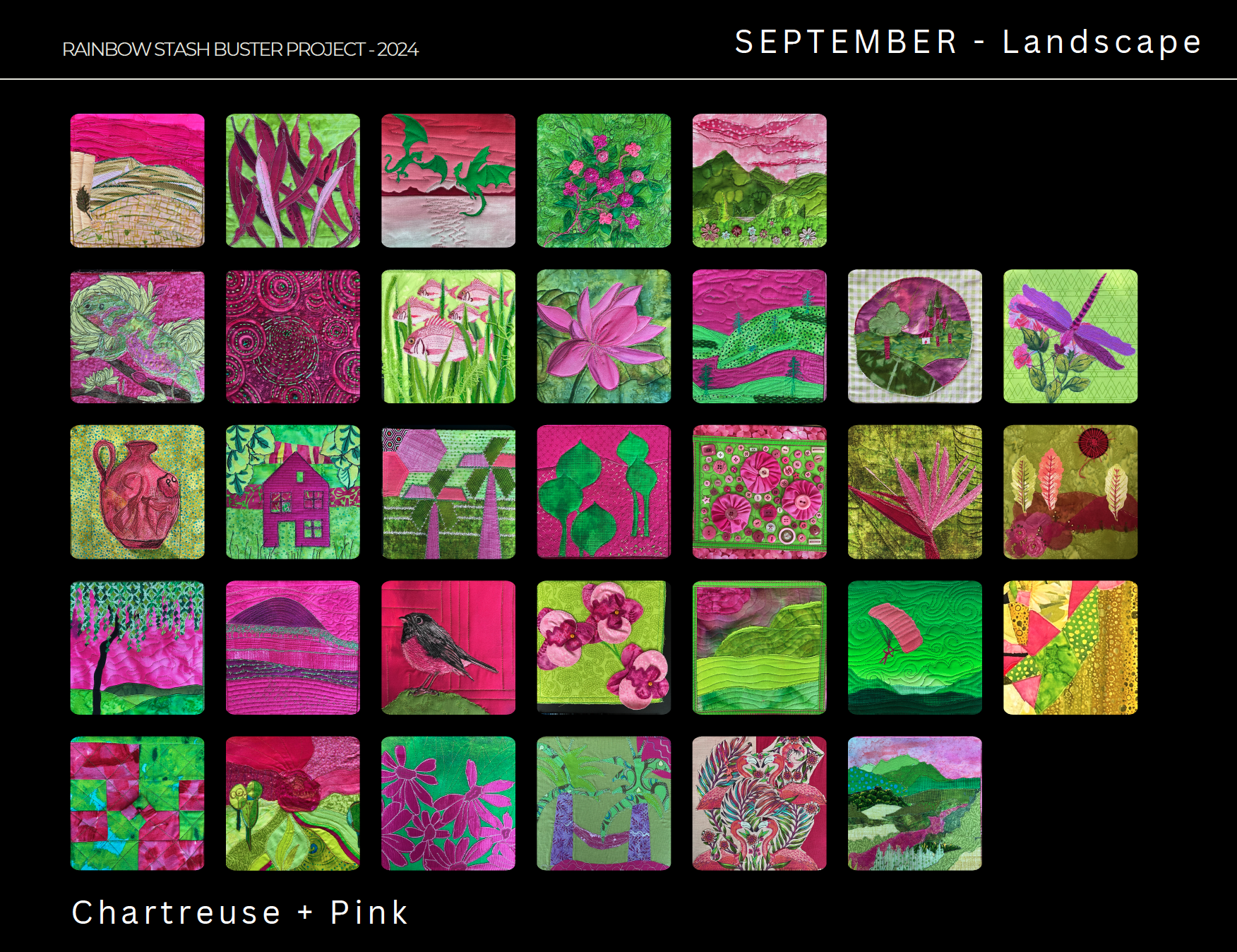
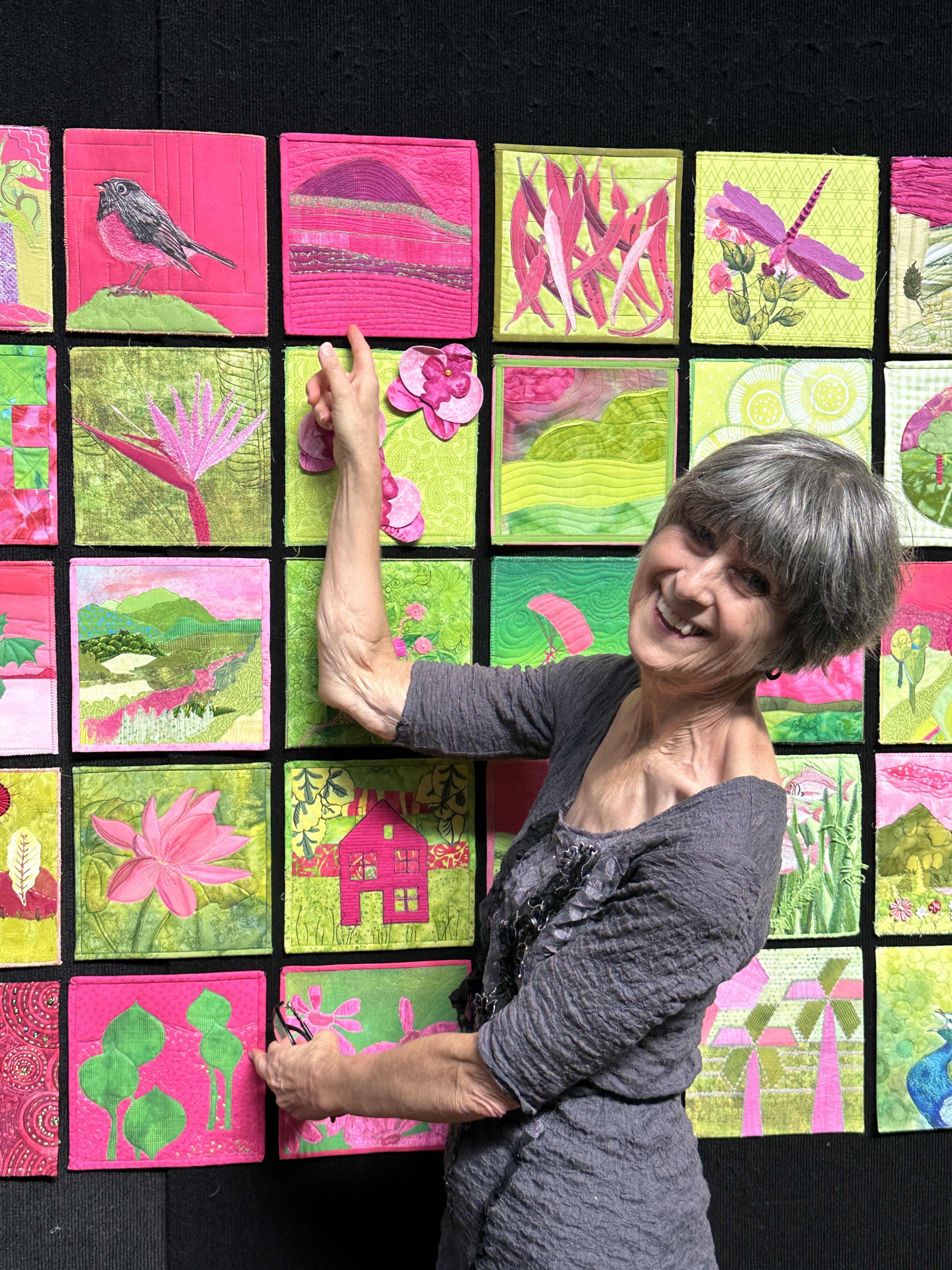
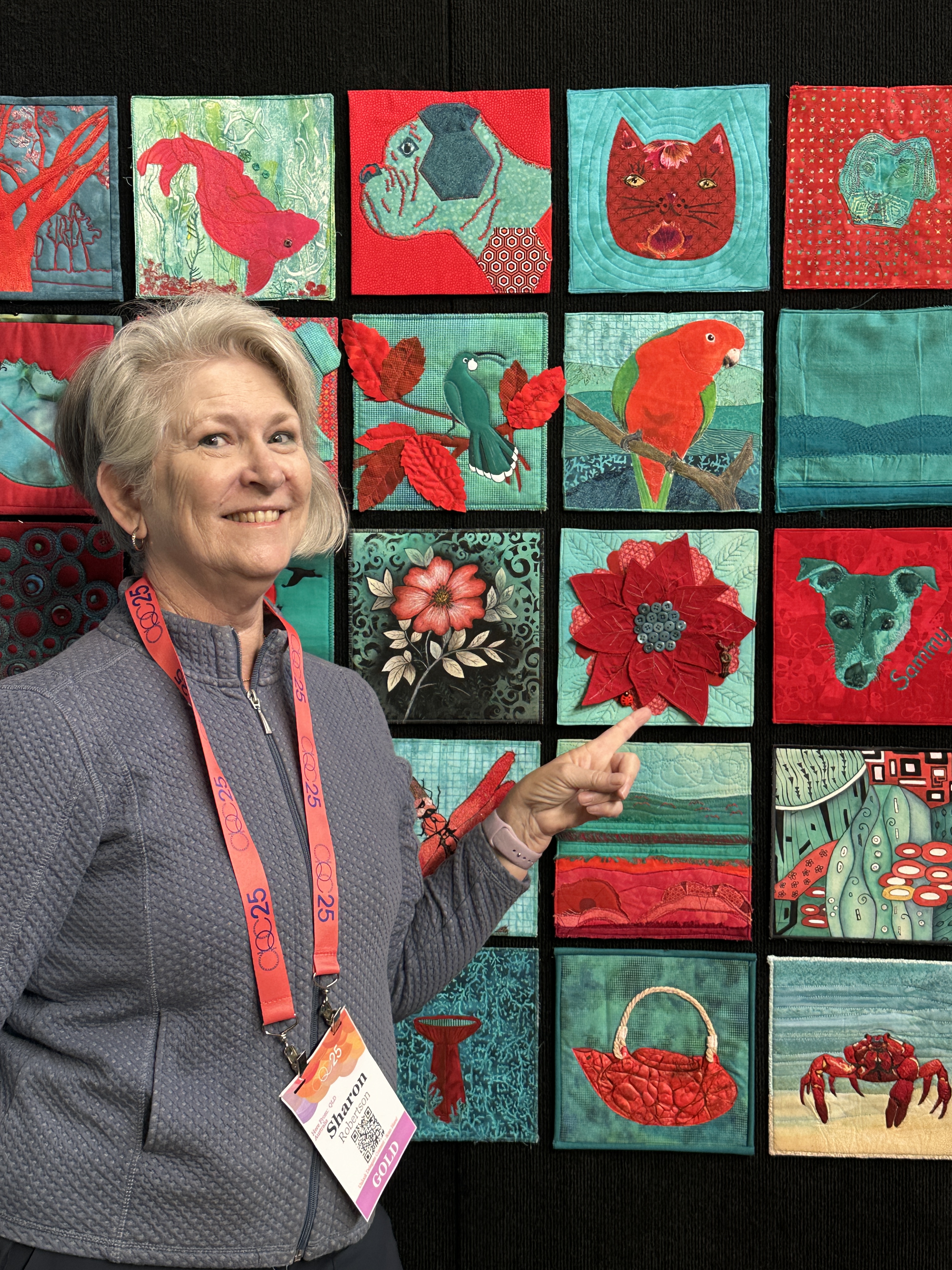
Each month, makers were challenged to create an 8-inch square textile artwork using two colours. The colours were randomly drawn and revealed live during our monthly Zoom sessions, creating an element of surprise and removing the temptation to simply choose favourite colour combinations.
A word was also drawn each month as an optional prompt.
Makers could interpret the word literally, metaphorically, personally or visually — or ignore it altogether.
The important thing was that the challenge provided a shared starting point without dictating the finished artwork.
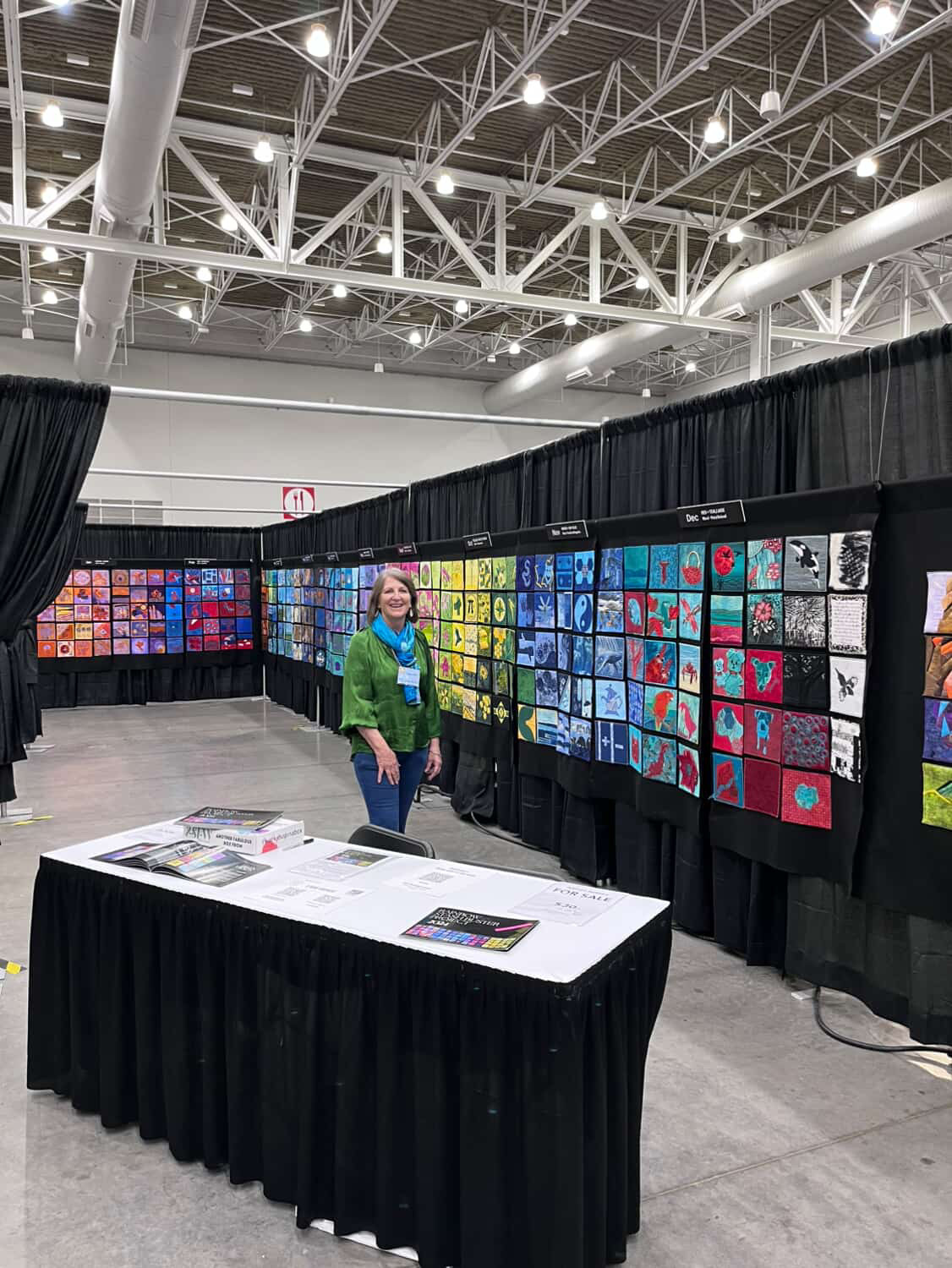
Brenda Wood – creator and mentor of the Rainbow Stash Buster Project at Mid- Atlantic Quilt Festival USA 2025
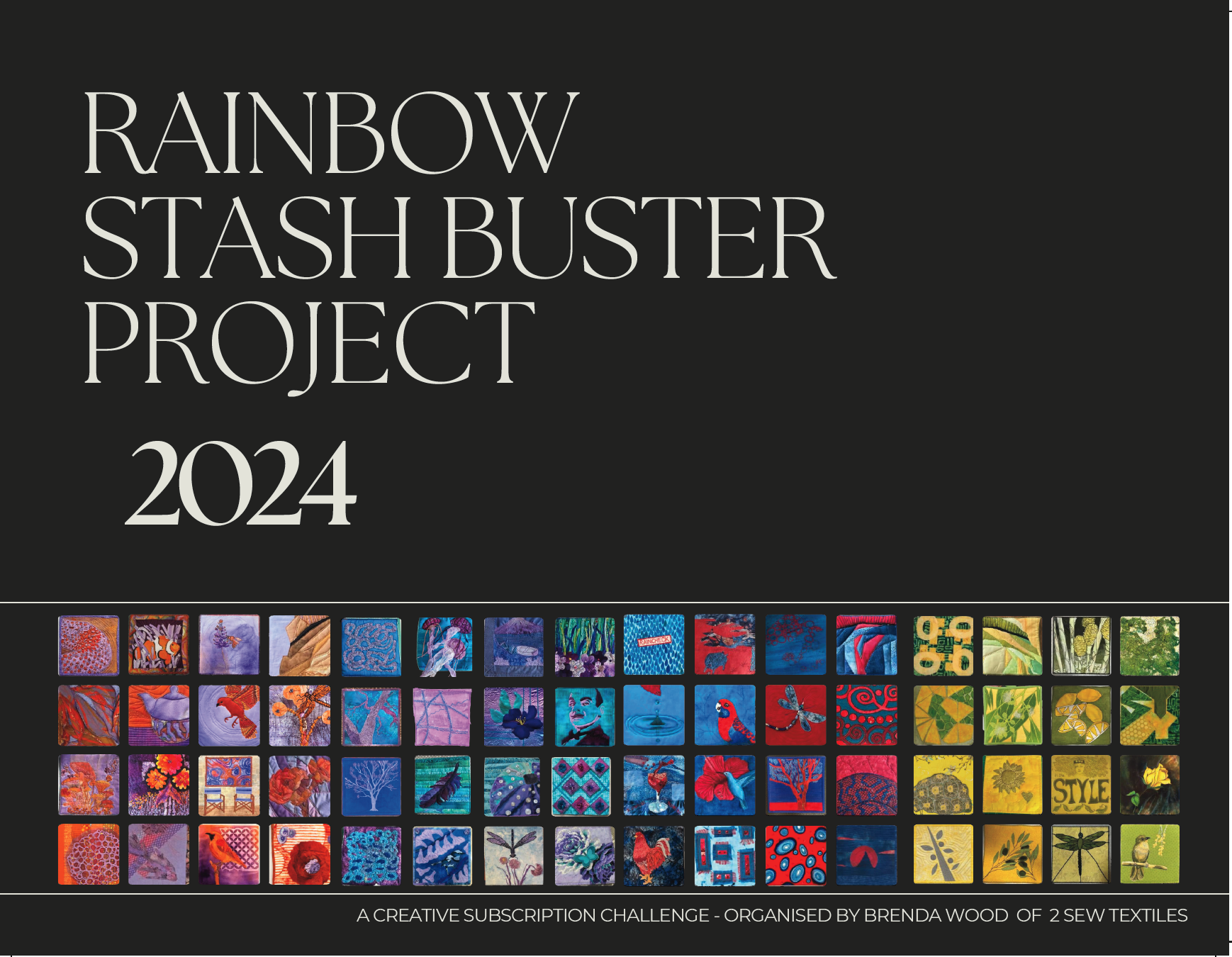
There is a book of the project available for purchase here: Digital Download .pdf
Individual artists, individual series
Makers were encouraged to work within their own creative practice.
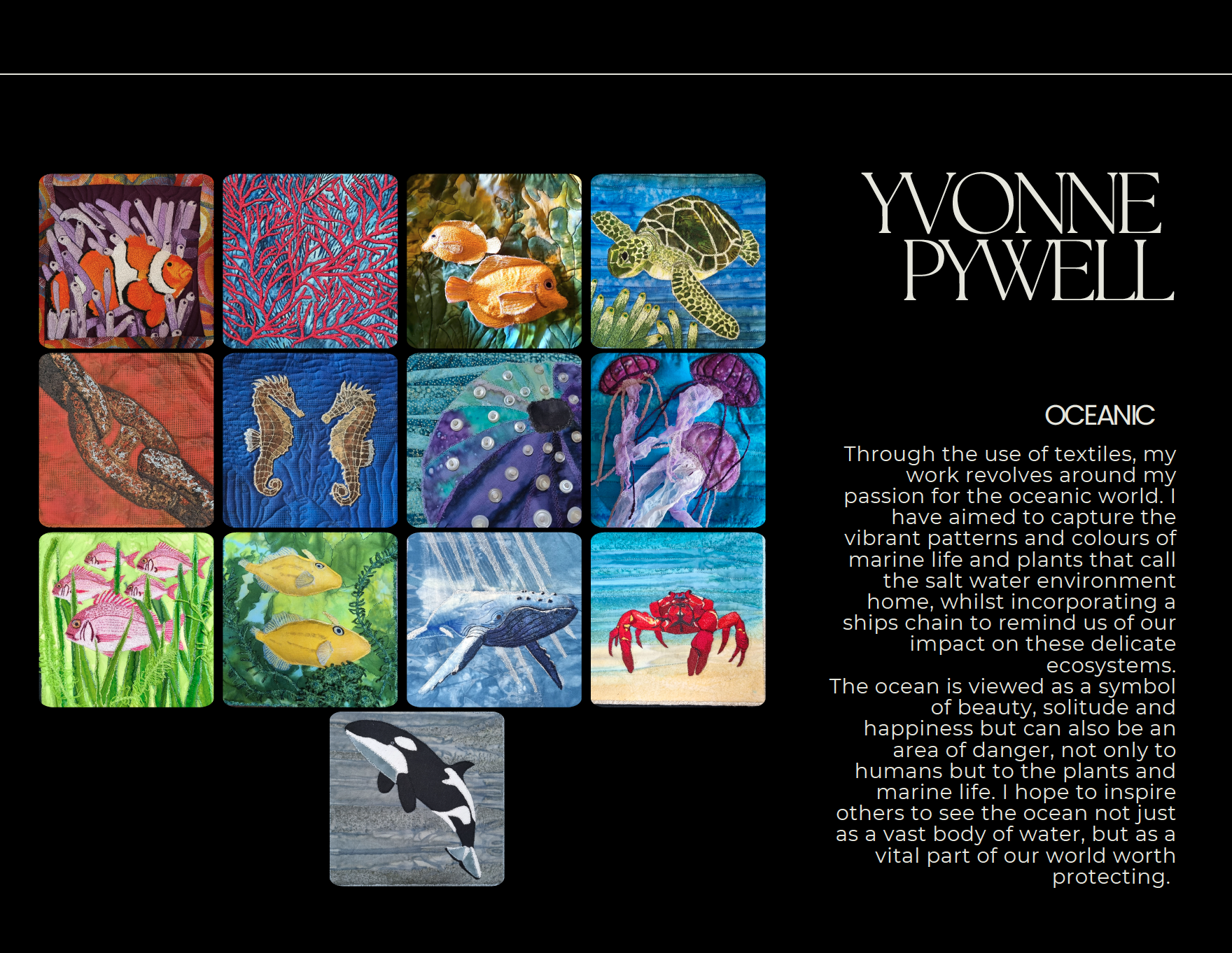
Rather than everyone being asked to make work around one prescribed theme, each participant could develop their own series, exploring subjects, ideas and techniques that were meaningful to them.
Someone might use the project to continue an existing body of work. Another might explore a new technique. Someone else might use the colour restriction to push an entirely different idea.
The only real common ground was the colour challenge, the optional word prompt and the 8-inch format.
This meant that the same randomly selected colours could produce remarkably different responses.
And that difference was exactly what made the collection interesting.

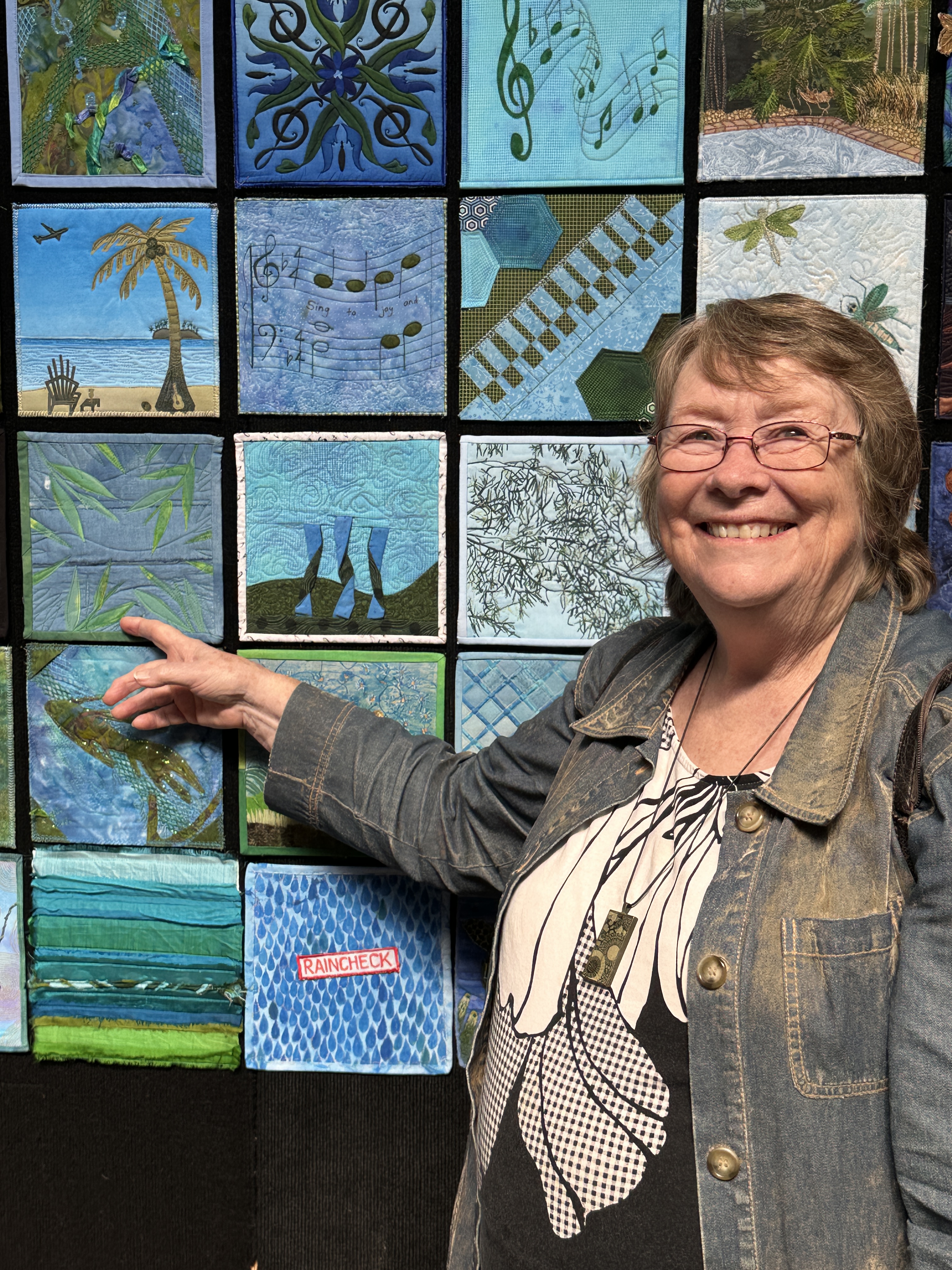
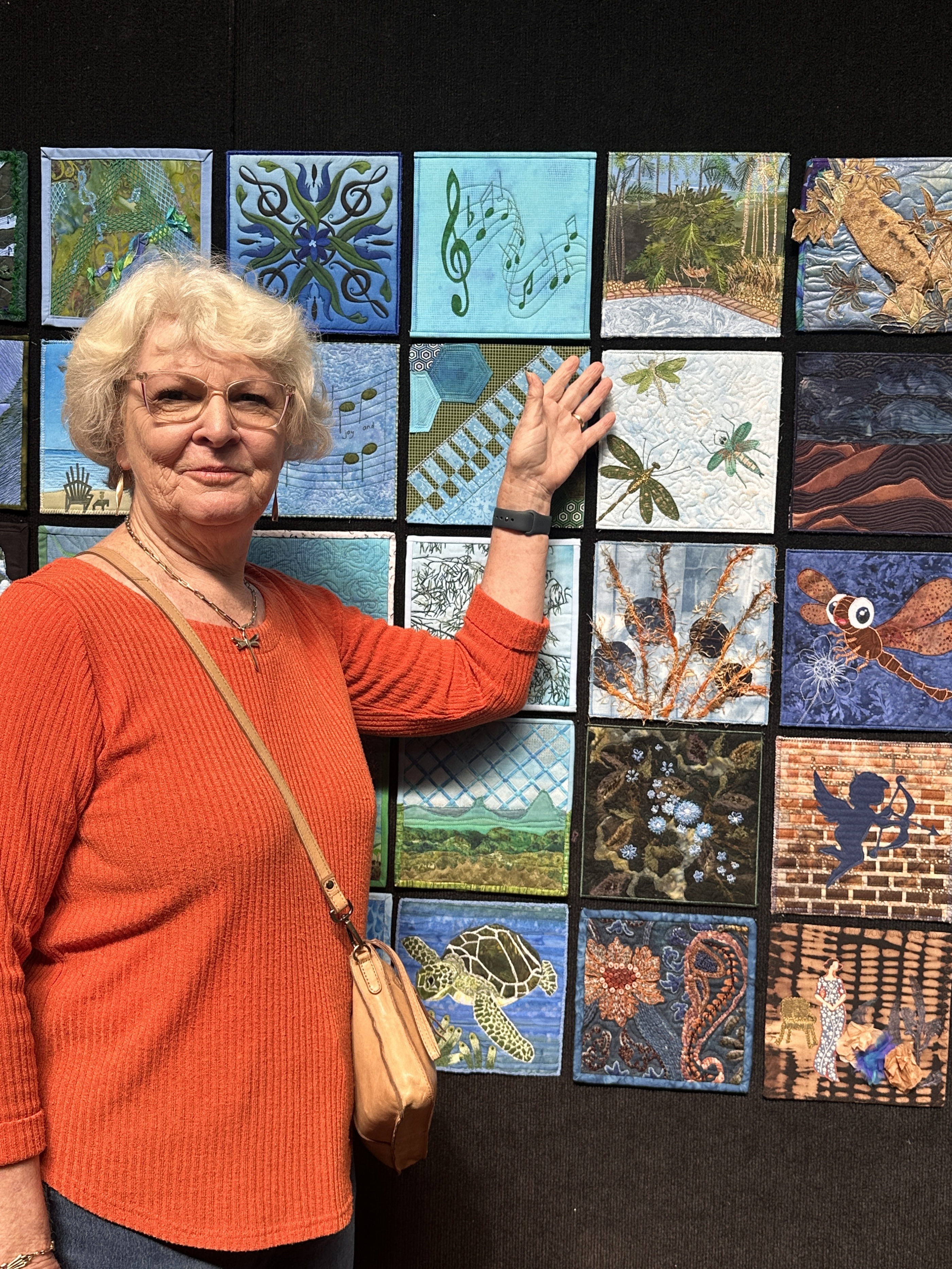
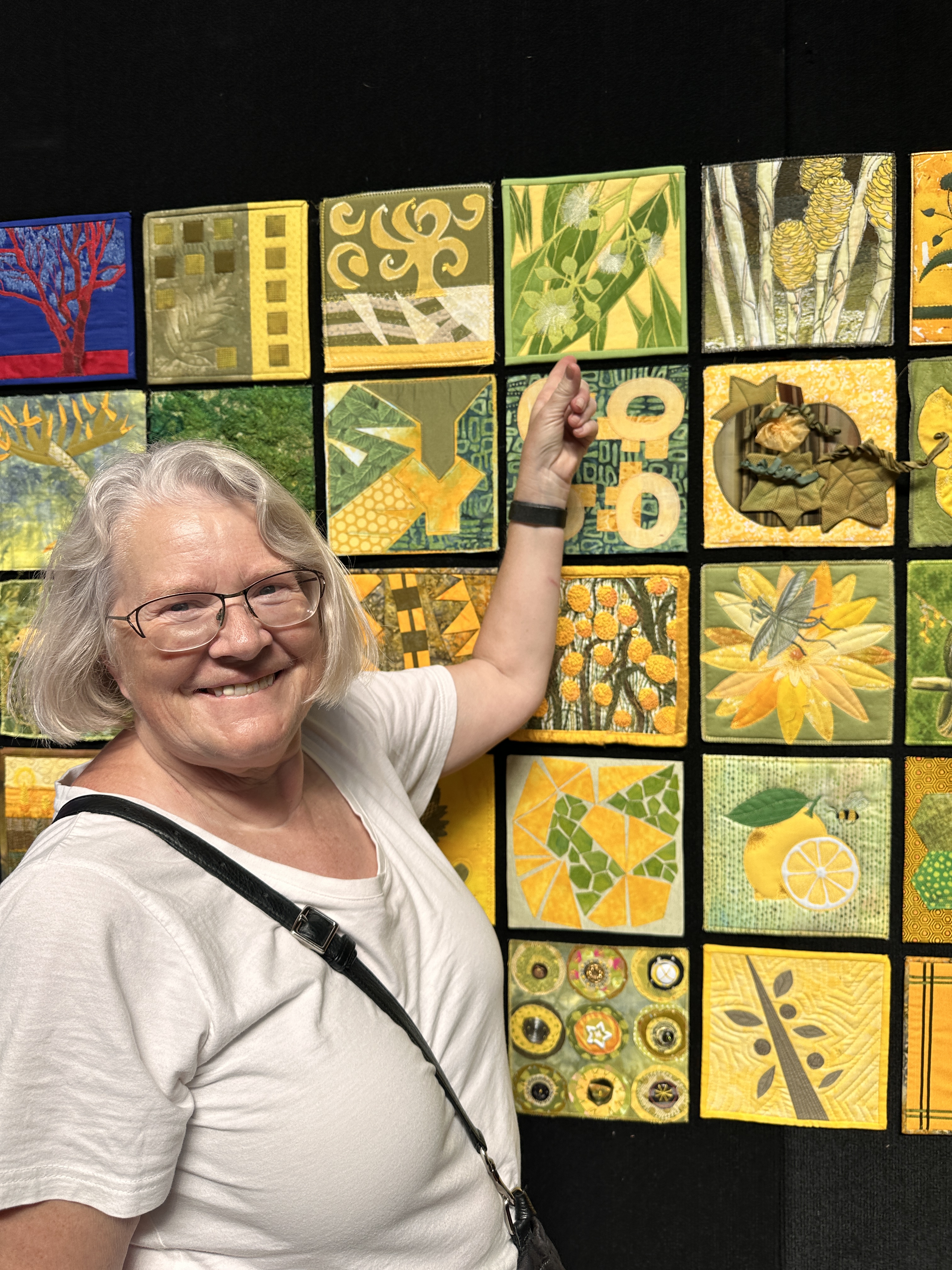
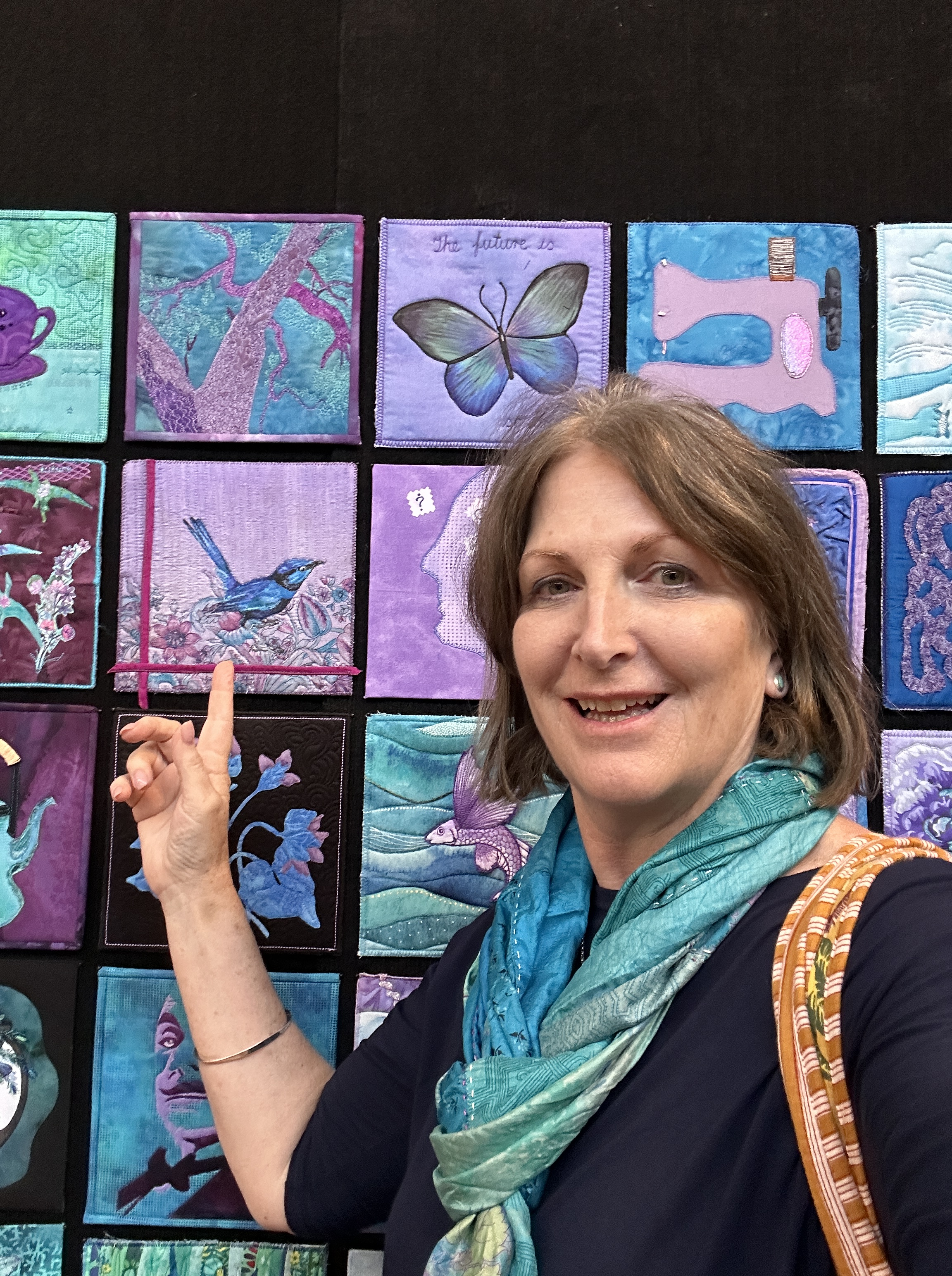
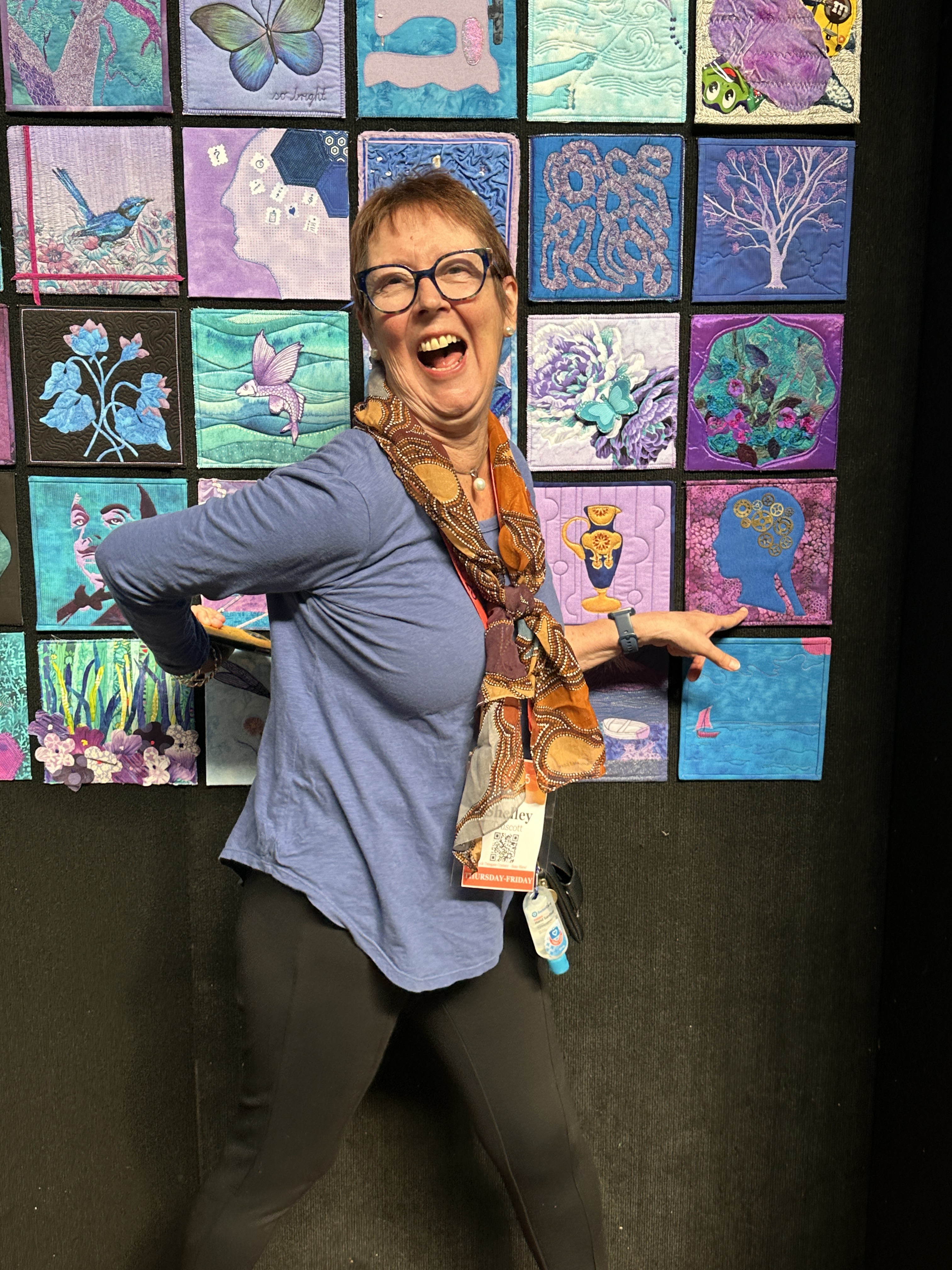
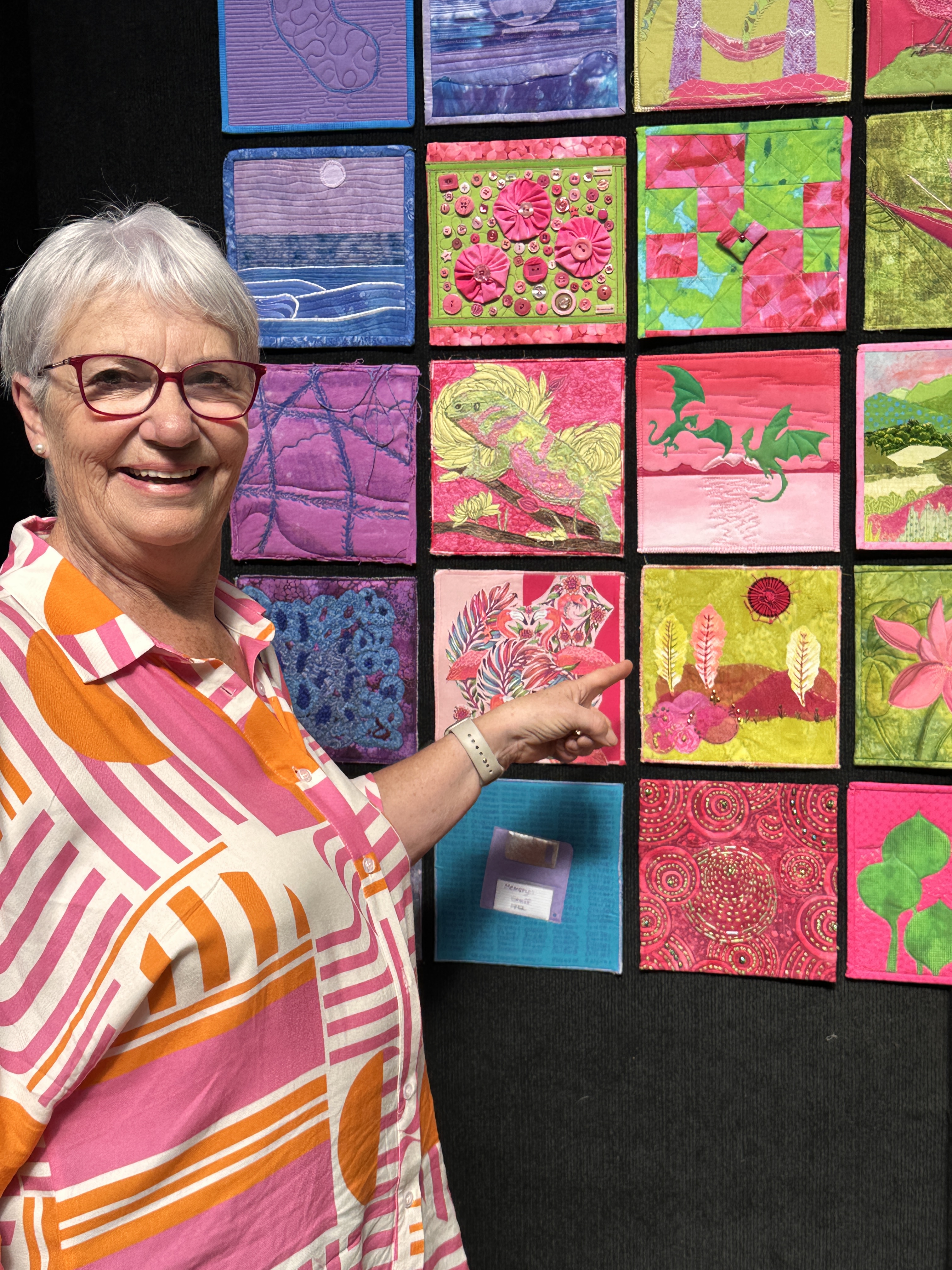
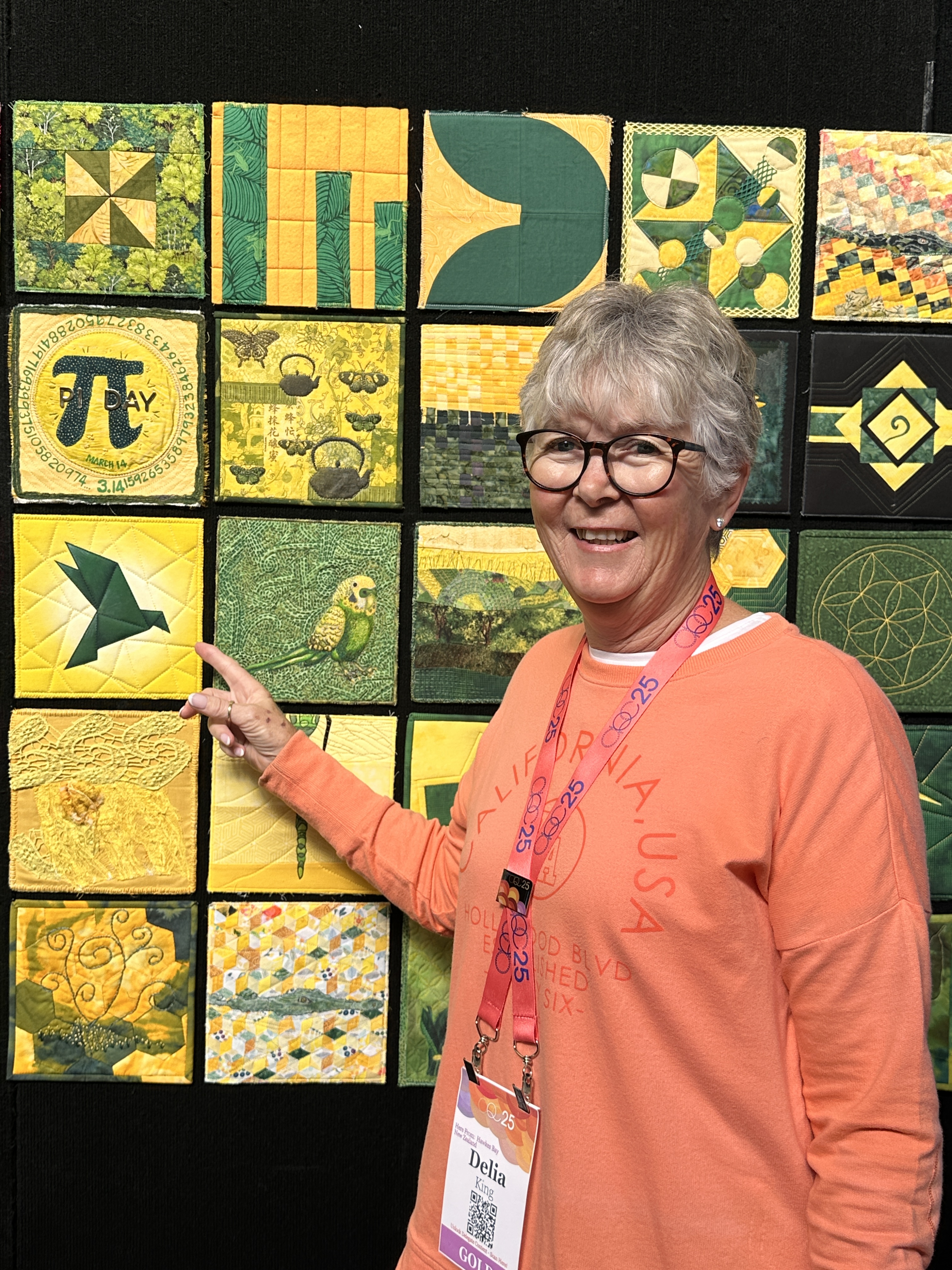
Designing the exhibition
Because the exhibition was planned from the beginning, I could think about how all those individual works might eventually work together.
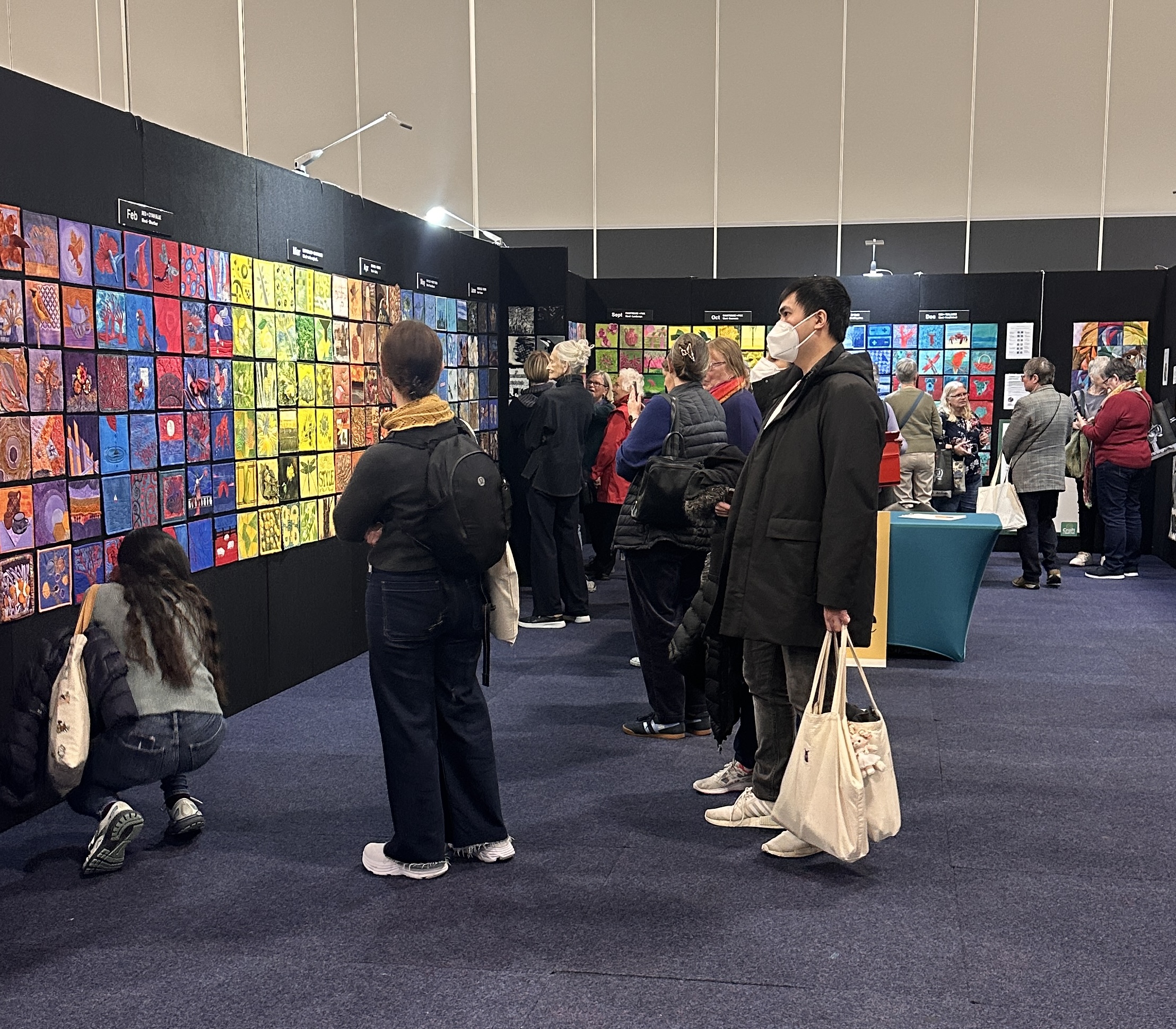
The decision was made to display the pieces as an ombré colour wash, following the order in which the monthly colours had been drawn.
Rather than separating the work into individual artists or displaying each month as a discrete group, the colours flowed through the exhibition.
From a distance, the installation became a large sweep of colour.
Closer inspection revealed the individual works — different subjects, different techniques, different levels of abstraction, different stories and very different interpretations of the same starting point.
The installation therefore worked on two levels: as a collective colour composition and as a collection of individual artists’ voices.
Participation didn’t have to mean completion
Another deliberate benefit of the group exhibition format was that makers did not have to complete every month to be part of the final display.
Some participants completed the entire challenge. Some missed months. Others created more than one set.
Because the exhibition was designed to bring all the completed works together, every maker could contribute their finished pieces, regardless of whether they completed the entire challenge.
This was an important part of the philosophy behind Rainbow Stash. The project was about participation, experimentation and connection rather than a requirement to complete a prescribed number of pieces.
The exhibition became a celebration of what everyone had made, rather than a display reserved only for those who had completed the full challenge.
How did it work?
The result was a project in which chance, constraint and individual artistic freedom worked together.
The colours were random.
The word prompts were also chosen randomly but were open to interpretation. eg: Positive/Negative.
This word prompt coincided with the perfect colour duo – light AND dark blue.
Working within their themes, the makers created an endless possibility of interpretations.
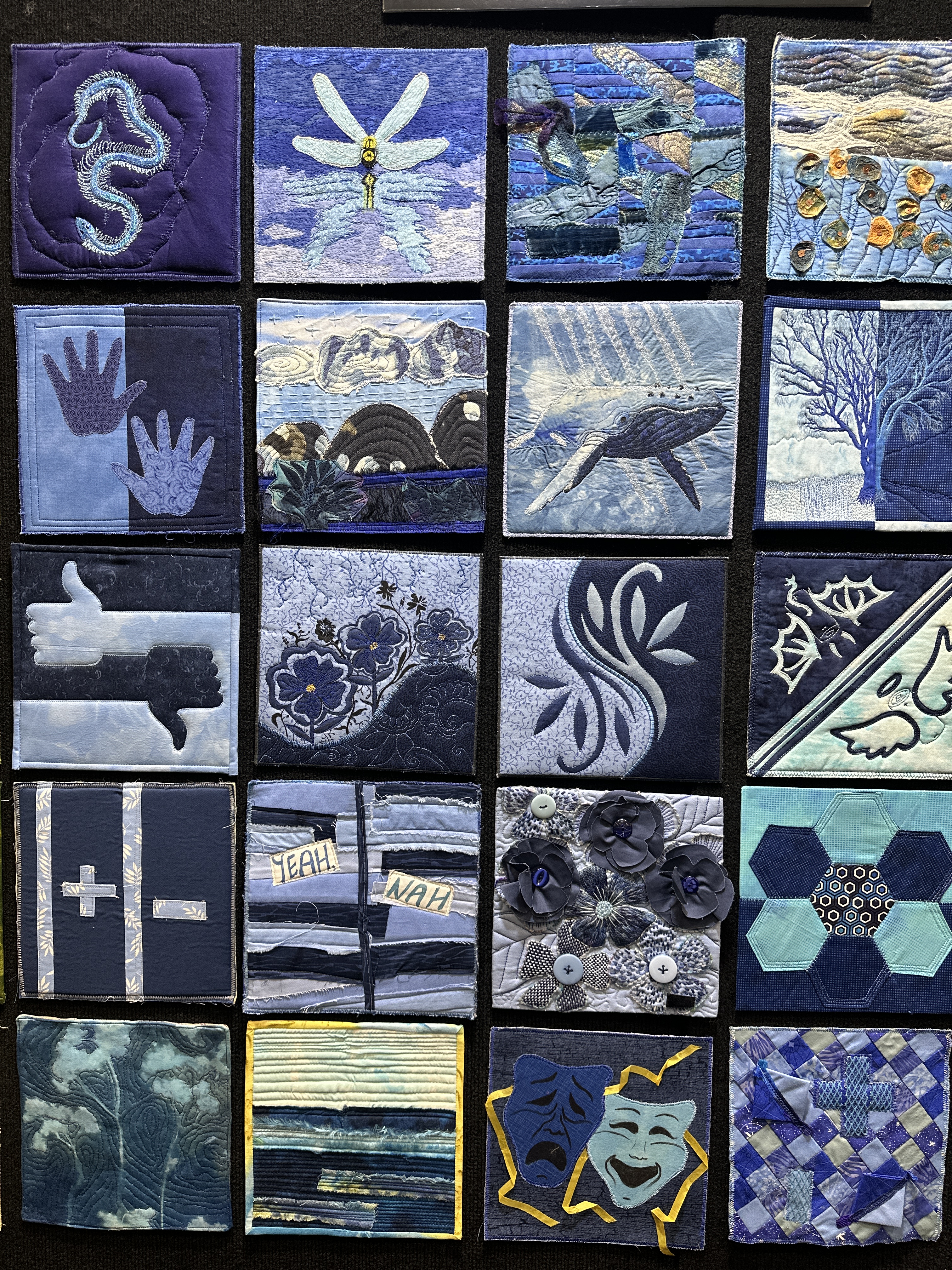
Positive/Negative Interpretations – Yeah/Nah, Light/Shadow, Alive/dead, Sun printing, positive/negative energy etc.
Throughout the challenge what each maker did with those starting points was entirely their own. Some makers built wonderful series, some just experimented each month.
I did 2 series.. one was textile experimentations.. the other was birds which was really fun.
And when all those individual responses were finally brought together in the ombré exhibition, something much larger emerged. A vision of colour and technique and confidence with community.
The Rainbow Stash Buster challenge has inspired many more groups to take on their own colour challenge.